


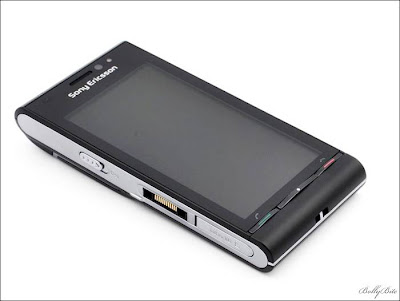
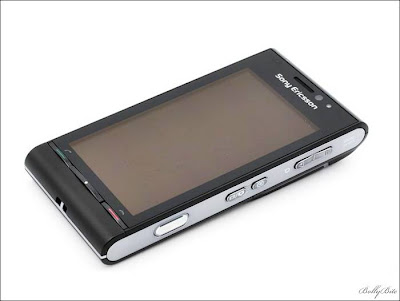
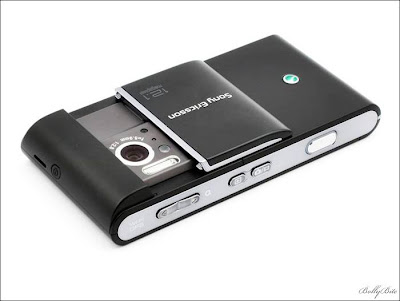
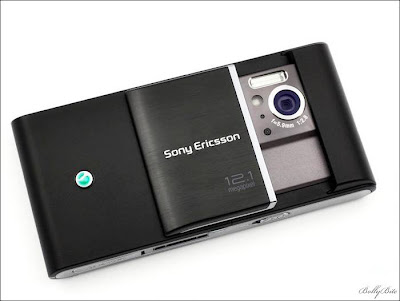
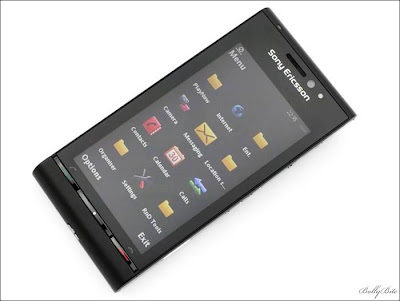
Sony Ericsson has launched a new camera phone. The phone is expected Idou, which contains the 12.1-megapixel camera with auto focus and a set of touching the camera advanced features such as true 16:9 widescreen and xenon flash. In one of a number of projects that will be launched this year under the umbrella of the entertainment is unlimited. Idou encapsulates the future of mobile entertainment in the palm of your hand to provide visual communication like never before. Building on what will become an institution of the Symbian operating system, and thousands of applications available on the Internet to allow applications to install new and exciting content from loading "PlayNowa to make Idou really for you.Specifications : Size of 112.0 x 55.0 x 13.0 mm (4.4 × 2.2 × 0.5 inches) Weight 126.0 g Screen 360x640 pixels 16,777,216 color TFT touchscreen Available in black, silver Bordeaux SanDisk microSD memory support
Showing posts with label Market. Show all posts
Showing posts with label Market. Show all posts
Friday, January 7, 2011
Sony Ericsson 12.1 Megapixel Phone
Sony Ericsson has launched a new camera phone. The phone is expected Idou, which contains the 12.1-megapixel camera with auto focus and a set of touching the camera advanced features such as true 16:9 widescreen and xenon flash. In one of a number of projects that will be launched this year under the umbrella of the entertainment is unlimited. Idou encapsulates the future of mobile entertainment in the palm of your hand to provide visual communication like never before. Building on what will become an institution of the Symbian operating system, and thousands of applications available on the Internet to allow applications to install new and exciting content from loading "PlayNowa to make Idou really for you.Specifications : Size of 112.0 x 55.0 x 13.0 mm (4.4 × 2.2 × 0.5 inches) Weight 126.0 g Screen 360x640 pixels 16,777,216 color TFT touchscreen Available in black, silver Bordeaux SanDisk microSD memory support



Friday, August 27, 2010
अब दो लाख तक नहीं लगेगा आयकर
केंद्र सरकार वेतनभोगी वर्ग पर काफी मेहरबान होती नजर आ रही है। सरकार के नए प्रस्ताव से कुछ इसी तरह की तस्वीर उभर कर सामने आई है। सरकार ने व्यक्तिगत आयकर छूट सीमा को मौजूदा 1.6 लाख रुपये से बढ़ाकर दो लाख रुपये करने का प्रस्ताव किया है। यही नहीं, कॉरपोरेट जगत पर भी सरकार की कृपा तय नजर आ रही है। सरकार ने कॉरपोरेट टैक्स पर सरचार्ज एवं सेस हटाने का प्रस्ताव किया है। जाहिर है, ऐसे में कंपनियों को भी काफी राहत मिलने की उम्मीद है। कैबिनेट ने गुरुवार को जिस बहुप्रतीक्षित डायरेक्ट टैक्स कोड (डीटीसी) विधेयक को मंजूरी दी उसी में इन सारी उत्साहवर्धक बातों का उल्लेख किया गया है। संसद के चालू सत्र में ही इसे पेश करने का मन बनाया गया है ताकि अगले वित्त वर्ष से डीटीसी लागू हो सके।
कैबिनेट की बैठक के बाद पत्रकारों से बातचीत में वित्त मंत्री प्रणब मुखर्जी ने ये सारी जानकारियां दीं। उन्होंने टैक्स के स्लैबों का तो खुलासा नहीं किया, लेकिन बताया कि तीन स्लैब होंगे। इसका खुलासा वित्त विधेयक में हेागा। कॉरपोरेट टैक्स के बारे में प्रणब का कहना है कि इसे 30 फीसदी पर ही बरकरार रखने का प्रस्ताव है, लेकिन इस पर कोई सेस या सरचार्ज नहीं लगेगा। इसके साथ ही उन्होंने कहा कि इसके पीछे मुख्य मकसद सरकार द्वारा दी जाने वाली तरह-तरह की कर रियायतों की संख्या को सीमित करना है।
इससे पहले प्रधानमंत्री मनमोहन सिंह की अध्यक्षता में गुरुवार की शाम यहां हुई बैठक में डीटीसी बिल को पेश करने के बारे में फैसला किया गया। मंत्रालय के सूत्रों से मिली जानकारी के अनुसार यह विधेयक देश के वर्तमान आयकर कानून का स्थान लेगा। इससे देश की कर प्रक्रिया आसान होगी। उनका कहना है कि डीटीसी से कर बोझ तो घटेगा, साथ ही इसका दायरा बढ़ेगा। इस वजह से सरकार को घाटा तो नहीं होगा, पर लोगों को फायदा होगा। सूत्रों का कहना है कि 30 अगस्त को इसे संसद में पेश किया जा सकता है।
वित्त मंत्रालय ने पहले डीटीसी विधेयक पर एक मसौदा तैयार किया था, लेकिन उसके प्रावधानों की उद्योग जगत के साथ-साथ आम आदमी ने भी काफी आलोचना की थी। इसमें पीएफ की निकासी पर टैक्स लगाने और उद्योग जगत की परिसंपत्तियों पर मिनिमम अल्टरनेटिव टैक्स (मैट) के प्रावधानों की सर्वाधिक आलोचना हुई थी। राजस्व सचिव सुनील मित्रा के मुताबिक अगस्त 2009 के दौरान जारी हुए डीटीसी पर 1600 रिप्रेजेंटेशन मिले थे। इन समस्याओं के समाधान के लिए मंत्रालय ने संशोधित डीटीसी तैयार किया।
वित्त मंत्रालय का कहना है कि रिवाइज्ड डीटीसी में सरकारी भविष्य निधि (जीपीएफ), पब्लिक प्रॉविडेंट फंड (पीपीएफ) और रिकॉग्नाइज्ड प्रॉविडेंट फंड (आरपीएफ) पर एग्जेंप्ट-एग्जेंप्ट-एग्जेंप्ट (ईईई) दर्जा बरकरार रहेगा। यही नहंी, भविष्य निधि संगठन की पेंशन योजना के साथ-साथ जनवरी 2004 के बाद भर्ती हुए सरकारी कर्मचारियों की पेंशन योजना पर भी ईईई दर्जा बरकरार रहेगा। उद्योग जगत के लिए राहत की बात यह है कि उन पर लगने वाले मैट में भी संशोधन हुआ। पहले कंपनियों की परिसंपत्तियों को मैट के दायरे में लाया गया था। हालांकि, अब प्रावधान यह है कि कंपनियों के बुक प्रॉफिट पर ही मैट लगेगा।
पहले मसौदे में 1.6 से 10 लाख रुपये तक की आय वालों पर 10 फीसदी, 10 से 15 लाख रुपये की आय वालों पर 20 फीसदी और इससे ऊपर की आय वालों पर 30 फीसदी सलाना के आयकर की सिफारिश की गई थी। संशोधित मसौदे में ऐसा कोई उल्लेख नहीं है। अधिकारियों का कहना है कि कर की दर तो वित्त विधेयक से ही पता लगेगी। संशोधित मसौदे की एक और विशेषता होम लोन लेने वालों के लिए स्पष्टीकरण है। इसमें कहा गया है कि होम लोन के ब्याज भुगतान पर पहले की ही तरह सालाना डेढ़ लाख रुपये की छूट मिलती रहेगी। पहले मसौदे में इस पर कुछ भी नहीं कहा गया था।
बिल में और क्या है खास
आयकर के होंगे तीन स्लैब, लेकिन इसकी दरों का खुलासा नहीं
कॉरपोरेट टैक्स की दर को 30 फीसदी पर ही बरकरार रखने का प्रस्ताव
जीपीएफ, पीपीएफ और आरपीएफ पर ईईई दर्जा बरकरार
ईपीएफओ की पेंशन योजना पर भी ईईई दर्जा कायम
जनवरी 2004 के बाद भर्ती हुए सरकारी कर्मचारियों की पेंशन योजना पर भी ईईई बरकरार
लेकिन यूलिप को रखा ईईई दर्जा के दायरे से बाहर
मैट कंपनी की परिसंपत्तियों के बजाय उसके बुक प्रॉफिट पर ही लगेगा
होम लोन लेने वालों के ब्याज भुगतान पर डेढ़ लाख की सालाना छूट कायम
(ईईई से तात्पर्य निवेश के समय, योगदान व राशि की निकासी के समय तीनों बार मिलने वाली कर छूट से है
कैबिनेट की बैठक के बाद पत्रकारों से बातचीत में वित्त मंत्री प्रणब मुखर्जी ने ये सारी जानकारियां दीं। उन्होंने टैक्स के स्लैबों का तो खुलासा नहीं किया, लेकिन बताया कि तीन स्लैब होंगे। इसका खुलासा वित्त विधेयक में हेागा। कॉरपोरेट टैक्स के बारे में प्रणब का कहना है कि इसे 30 फीसदी पर ही बरकरार रखने का प्रस्ताव है, लेकिन इस पर कोई सेस या सरचार्ज नहीं लगेगा। इसके साथ ही उन्होंने कहा कि इसके पीछे मुख्य मकसद सरकार द्वारा दी जाने वाली तरह-तरह की कर रियायतों की संख्या को सीमित करना है।
इससे पहले प्रधानमंत्री मनमोहन सिंह की अध्यक्षता में गुरुवार की शाम यहां हुई बैठक में डीटीसी बिल को पेश करने के बारे में फैसला किया गया। मंत्रालय के सूत्रों से मिली जानकारी के अनुसार यह विधेयक देश के वर्तमान आयकर कानून का स्थान लेगा। इससे देश की कर प्रक्रिया आसान होगी। उनका कहना है कि डीटीसी से कर बोझ तो घटेगा, साथ ही इसका दायरा बढ़ेगा। इस वजह से सरकार को घाटा तो नहीं होगा, पर लोगों को फायदा होगा। सूत्रों का कहना है कि 30 अगस्त को इसे संसद में पेश किया जा सकता है।
वित्त मंत्रालय ने पहले डीटीसी विधेयक पर एक मसौदा तैयार किया था, लेकिन उसके प्रावधानों की उद्योग जगत के साथ-साथ आम आदमी ने भी काफी आलोचना की थी। इसमें पीएफ की निकासी पर टैक्स लगाने और उद्योग जगत की परिसंपत्तियों पर मिनिमम अल्टरनेटिव टैक्स (मैट) के प्रावधानों की सर्वाधिक आलोचना हुई थी। राजस्व सचिव सुनील मित्रा के मुताबिक अगस्त 2009 के दौरान जारी हुए डीटीसी पर 1600 रिप्रेजेंटेशन मिले थे। इन समस्याओं के समाधान के लिए मंत्रालय ने संशोधित डीटीसी तैयार किया।
वित्त मंत्रालय का कहना है कि रिवाइज्ड डीटीसी में सरकारी भविष्य निधि (जीपीएफ), पब्लिक प्रॉविडेंट फंड (पीपीएफ) और रिकॉग्नाइज्ड प्रॉविडेंट फंड (आरपीएफ) पर एग्जेंप्ट-एग्जेंप्ट-एग्जेंप्ट (ईईई) दर्जा बरकरार रहेगा। यही नहंी, भविष्य निधि संगठन की पेंशन योजना के साथ-साथ जनवरी 2004 के बाद भर्ती हुए सरकारी कर्मचारियों की पेंशन योजना पर भी ईईई दर्जा बरकरार रहेगा। उद्योग जगत के लिए राहत की बात यह है कि उन पर लगने वाले मैट में भी संशोधन हुआ। पहले कंपनियों की परिसंपत्तियों को मैट के दायरे में लाया गया था। हालांकि, अब प्रावधान यह है कि कंपनियों के बुक प्रॉफिट पर ही मैट लगेगा।
पहले मसौदे में 1.6 से 10 लाख रुपये तक की आय वालों पर 10 फीसदी, 10 से 15 लाख रुपये की आय वालों पर 20 फीसदी और इससे ऊपर की आय वालों पर 30 फीसदी सलाना के आयकर की सिफारिश की गई थी। संशोधित मसौदे में ऐसा कोई उल्लेख नहीं है। अधिकारियों का कहना है कि कर की दर तो वित्त विधेयक से ही पता लगेगी। संशोधित मसौदे की एक और विशेषता होम लोन लेने वालों के लिए स्पष्टीकरण है। इसमें कहा गया है कि होम लोन के ब्याज भुगतान पर पहले की ही तरह सालाना डेढ़ लाख रुपये की छूट मिलती रहेगी। पहले मसौदे में इस पर कुछ भी नहीं कहा गया था।
बिल में और क्या है खास
आयकर के होंगे तीन स्लैब, लेकिन इसकी दरों का खुलासा नहीं
कॉरपोरेट टैक्स की दर को 30 फीसदी पर ही बरकरार रखने का प्रस्ताव
जीपीएफ, पीपीएफ और आरपीएफ पर ईईई दर्जा बरकरार
ईपीएफओ की पेंशन योजना पर भी ईईई दर्जा कायम
जनवरी 2004 के बाद भर्ती हुए सरकारी कर्मचारियों की पेंशन योजना पर भी ईईई बरकरार
लेकिन यूलिप को रखा ईईई दर्जा के दायरे से बाहर
मैट कंपनी की परिसंपत्तियों के बजाय उसके बुक प्रॉफिट पर ही लगेगा
होम लोन लेने वालों के ब्याज भुगतान पर डेढ़ लाख की सालाना छूट कायम
(ईईई से तात्पर्य निवेश के समय, योगदान व राशि की निकासी के समय तीनों बार मिलने वाली कर छूट से है
New Direct Tax Code: Pay less in taxes from April 2011
New Delhi: A windfall for taxpayers from the next financial year. You will in fact have to pay less Direct taxes in every slab of income. This comes with the Cabinet clearing the Direct tax code.
The much-awaited Direct Taxes Code (DTC) Bill is likely to be tabled in Parliament during the ongoing Monsoon session and thereafter it may be referred to a select committee of members of both houses of Parliament.
The new provisions under the Direct Tax Code are as follows:
Corporate tax has been kept at 30%.
The new Code comes into effect from April, 2011.
After the approval of the Cabinet, the decks are cleared for tabling the legislation in the Monsoon Session of Parliament so that the new Act ushering in reduced tax rates and exemptions may come into effect from next fiscal.
When enacted, the Code will replace the archaic Income Tax Act and simplify the whole direct tax regime in the country.
The Code aims at reducing tax rates, but expanding the tax base by minimising exemptions.
The Finance Ministry had earlier come out with a draft on the (Direct Tax Code) DTC bill, some of whose provisions drew strong criticism from industry as well as the public.
To address those issues, the ministry brought out the revised draft, dropping earlier proposals of taxing provident funds on withdrawal and levying Minimum Alternate Tax on corporates based on their assets.
"As of now, it is proposed to provide the EEE (Exempt-Exempt-Exempt) method of taxation for Government Provident Fund (GPF), Public Provident Fund (PPF) and Recognised Provident Funds (RPF) ...", the revised DTC released by the Finance Ministry said.
The revised draft also puts pensions administered by the interim regulator PFRDA, including pension of government employees who were recruited since January 2004, under EEE treatment.
The first DTC draft had proposed to tax all savings schemes including provident funds at the time of withdrawal bringing them under the EET (Exempt-Exempt-Tax) mode.
Under the EEE mode, the tax exemption is enjoyed at all the three stages - investment, accumulation and withdrawal.
The earlier DTC draft had proposed to reduce the corporate tax to 25 per cent from the present 30 per cent. The revised proposal has also made it clear that tax incentives on housing loans will continue. Payment on interest on housing loans up to Rs. 1.5 lakh will continue. The earlier draft was silent on housing loans.
The much-awaited Direct Taxes Code (DTC) Bill is likely to be tabled in Parliament during the ongoing Monsoon session and thereafter it may be referred to a select committee of members of both houses of Parliament.
The new provisions under the Direct Tax Code are as follows:
- Tax for income between Rs. 2 lakh - Rs. 5 lakh: 10%
- Tax for income between Rs. 5 lakh - Rs. 10 lakh: 20%
- Tax for income over Rs. 10 lakh: 30%
Corporate tax has been kept at 30%.
The new Code comes into effect from April, 2011.
After the approval of the Cabinet, the decks are cleared for tabling the legislation in the Monsoon Session of Parliament so that the new Act ushering in reduced tax rates and exemptions may come into effect from next fiscal.
When enacted, the Code will replace the archaic Income Tax Act and simplify the whole direct tax regime in the country.
The Code aims at reducing tax rates, but expanding the tax base by minimising exemptions.
The Finance Ministry had earlier come out with a draft on the (Direct Tax Code) DTC bill, some of whose provisions drew strong criticism from industry as well as the public.
To address those issues, the ministry brought out the revised draft, dropping earlier proposals of taxing provident funds on withdrawal and levying Minimum Alternate Tax on corporates based on their assets.
"As of now, it is proposed to provide the EEE (Exempt-Exempt-Exempt) method of taxation for Government Provident Fund (GPF), Public Provident Fund (PPF) and Recognised Provident Funds (RPF) ...", the revised DTC released by the Finance Ministry said.
The revised draft also puts pensions administered by the interim regulator PFRDA, including pension of government employees who were recruited since January 2004, under EEE treatment.
The first DTC draft had proposed to tax all savings schemes including provident funds at the time of withdrawal bringing them under the EET (Exempt-Exempt-Tax) mode.
Under the EEE mode, the tax exemption is enjoyed at all the three stages - investment, accumulation and withdrawal.
The earlier DTC draft had proposed to reduce the corporate tax to 25 per cent from the present 30 per cent. The revised proposal has also made it clear that tax incentives on housing loans will continue. Payment on interest on housing loans up to Rs. 1.5 lakh will continue. The earlier draft was silent on housing loans.
Income Tax limit now 2 Lakh
| The proposed Direct Tax Code is a combination of major tax relief and removal of most tax-exempted benefits. It is expected to usher in a new tax regime of transparency and greater compliance writes Dilip Maitra. | |
 When archaic rules have to be replaced with new ones, the changes must be dramatic and path breaking. This is what Union Finance Minister Pranab Mukherjee conveyed to all taxpayers when he introduced the draft Direct Tax Code (Tax Code) last week. The Tax Code, now open to public debate, will be introduced as a Bill in Parliament’s winter session. If passed, it will become the new Income Tax Act, replacing the existing four decade old IT Act of 1961. The new IT Act will come into force from April 1, 2011. When archaic rules have to be replaced with new ones, the changes must be dramatic and path breaking. This is what Union Finance Minister Pranab Mukherjee conveyed to all taxpayers when he introduced the draft Direct Tax Code (Tax Code) last week. The Tax Code, now open to public debate, will be introduced as a Bill in Parliament’s winter session. If passed, it will become the new Income Tax Act, replacing the existing four decade old IT Act of 1961. The new IT Act will come into force from April 1, 2011. In the foreward to the Tax Code Mukherjee explains that the aim is to eliminate distortions in the tax structure, introduce moderate levels of taxation, expand the tax base, improve tax compliance, simplify the language and lower tax litigations. Initial analysis shows that most of these objectives are achievable by tweaking of some provisions. Talking to Deccan Herald, KPMG Executive Director Personal Taxation, IT & ESOP Vikas Vasal said “The new proposals are in the right direction. They will simplify regulations and reduce unnecessary litigations significantly.” Agreed Bangalore Chamber of Industry & Commerce (BCIC) President K R Girish. “The Code is a completely new law and not an amendment of the existing Income Tax Act. This is a commendable change as one has always experienced tinkering of existing laws, ” observes Girish. Major gains for individuals What do the major changes proposed in the Tax Code look like? Personal income tax, almost all salaried persons will agree, in our country is one of the highest in the world. More open and honest an employer is in terms of disclosing remunerations, worse it is for the employees because taxable income goes up. The present system thus rewards dishonesty and non-disclosure of income by way of lower tax. The Tax Code will try to address these issues by significantly lowering income tax and by disallowing all tax-free perks. It proposed exemption of income tax on specified savings up to Rs 3 lakh a year as against the present deduction limit of Rs 1 lakh for all types of savings under 80C of the IT Act. The catch, however, is that a few long term investments like public provident fund, employer’s provident fund, insurance premium in pension (annuity) schemes, Post Office National Savings Scheme etc will be eligible for tax exemption. But contributions to fixed deposits, interest and principal payment on housing loans, educational expenses of dependents, and a host of other forms of savings will not qualify as eligible for tax savings. The thrust, clearly, is to induce long term savings for future needs. The Tax Code also raised income tax slabs significantly, lowering the tax burden on individuals. The draft proposed exempting the general tax payer from paying tax for income up to Rs 1.60 lakh a year. According to the proposal, a tax payer will pay at the rate of 10 per cent for income above Rs 1.60 lakh and up to Rs 10 lakh, at 20 per cent on income between Rs 10 lakh and Rs 25 lakh and at 30 per cent for income beyond Rs 25 lakh. At present, while the basic exemption limit remains at Rs 1.60 lakh a year, the limit for tax slabs are much lower — one pays 10 per cent tax on income ranging between Rs 1.60 lakh and Rs 3 lakh, 20 per cent between Rs 3 lakh and Rs 5 lakh and 30 per cent beyond Rs 5 lakh. Thus, for an individual with taxable income of Rs 10 lakh a year tax payment will drop from Rs 1.68 lakh to Rs 51,000, a net annual saving of Rs 1.17 lakh. The exemption limit for women and senior citizens will continue to be Rs 1.90 lakh and Rs 2.40 lakh, respectively. Not without pains If the finance minister is for giving major relief to tax payers, he will also make sure that there aren’t many avenues to avoid taxes. So, as a rider, the Tax Code proposes to add all perquisites enjoyed by a tax payer to income for the purpose of tax calculations. In other words, allowances like leave travel, furnishings, entertainment expenses, conveyance, medical etc, will be added to income. Similarly, the tax treatment for post-retirement benefits may prove to be a major dampener. Money saved in specified instruments like PPF and PF for getting tax exemption will become taxable when they are withdrawn later. These investments, when accrued, were earlier exempted from tax. The Tax Code says that under the Exempt Exempt Tax (EET) system all withdrawals will attract tax because the amount withdrawn will be treated as part of the income for that year. But in the Tax Code it is unclear if the employee’s contribution to PF and PPF will be taxed at the time of withdrawal. KPMG’s Vasal says that this is an anomaly that needs to be corrected. He believes that only the employer’s contribution and interest accrued to the account will be taxed. Though taxing financial gains available after retirement will pinch the retired people, Vasal is of the view that the proposal is equitable as income is liable to be taxed at least once. However, as a relief to senior citizens, tax exemption limits for them should be raised to Rs 5 lakh per annum instead of Rs 2.40 lakh at present. The Tax Code, however, specified that the tax exempt status currently available to withdrawals would continue to apply to amounts accumulated in post-retirement savings schemes like PPF, EPF, etc, up to March 31, 2011. Money that accrues from April 1, 2011 will be taxed on withdrawal. Wealth tax benefits The proposed Tax Code has sought to make major changes in wealth tax calculations and rates. The threshold limit for wealth tax will be raised to Rs 50 crore from the present Rs 30 lakh and the tax rate was reduced from 1 per cent to 0.25 per cent. But, in a smart move, to expand the scope of taxation the Tax Code included financial assets like shares, corporate bonds, fixed deposits, etc in wealth tax. The valuation of these assets will be done at cost or at market price, whichever is lower. In case of capital gains tax too, the Tax Code proposed some sweeping changes. It has done away with the present system of short-term and long-term capital gain tax, and replaced it with a uniform structure and gains will be taxed at the marginal tax rate as applicable to the tax payer. The implications of these changes are clear: The period of holding has no bearing on the tax payable and bigger investors will be taxed at higher rates than the smaller ones. A mixed bag For the corporate world, the proposed reduction in the tax rate to 25 per cent from the existing 30 per cent is certainly good news and will help lowering the tax burden of India Inc in a big way. But at the same time the Tax Code proposes to do away with many exemptions that help lowering the tax. In a significant policy change, the Tax Code plans to discontinue all profit linked incentives for area-based investments like setting up plants in a backward area or in the north-east with investment-linked incentives in specific sectors like infrastructure, power, exploration and oil production etc. Moreover, under the new proposal, tax holiday will not be for a specific period, as is the case now, but will be equal to all capital and revenue expenditure barring land, goodwill and debts. Once a firm recovers the permitted investments and profits will be taxed. This change is aimed at incentivising capital formation in critical areas and remove incentives to shift profits from the taxable unit to the exempted unit. On the mat The Tax Code has also proposed changes in the calculation of minimum alternate tax (MAT) payable by corporates. MAT will now be levied at 2 per cent of the value of gross assets of a firm in case of all companies except for banks which will pay tax at 0.25 per cent. This shift in MAT from book profits to gross assets is aimed at encouraging optimal utilisation and increased efficiency of assets. But Ernst & Young Partner- Tax & Regulatory Services, Sudhir Kapadia feels that this proposal seems to run counter to the objective of encouraging of capital investments for productive growth. Vasal of KPMG also of the view that changes in MAT rule will cause hardship to loss making companies as they will have to pay tax on assets. Carrot and stick If the Tax Code is generous in giving relief to tax payers, be sure, it will also make life miserable for those who evade tax through fraudulent means. As the Tax Code prescribes stiff penalties and prosecution for non-compliance with the tax laws, it proposes that every tax offense under the Code will be punishable by both imprisonment and fine. Apart from defaulters, the Tax Code proposes to punish tax consultants who help in tax evasion. It gives sweeping powers and blanket protection to Income Tax officials for initiating court proceedings on matters relating to tax offences.  | |
Friday, August 20, 2010
25 Most Promising New Products for 2010
25 Most Promising New Products for 2010
2010 is a promising year for bring you the most functional, promising, and novel of the batch. If youre tired of waiting for flying cars and voice-controlled sunglasses, this just might be your year.
25. nPower Personal Energy Generator
The PEG harvests one of the biggest energy hogs on earthyou. Place the little device into your bag or briefcase, plug in your cell phone, GPS, or iPod, and let your kinetic energy power up your gadgets while you walk. You can get an 80% charge in one hour through your own energy alone. Green and brilliant.
24. Flying Car: Terrafugia
Even though were well into the 2000s, nobody has come up with a Jetsons-style flying car. Until now. The Terrafugia Transition is more of a driving plane than a flying car, but its a promising first step. The worlds first street legal plane hits runways and highways in 2010.
23. Sony 3D-360 Hologram
No glasses needed! Just turn on your tabletop unit and enjoy a 360-degree view of images and possibly video through this stereoscopic display. Sony isnt yet sure what to use it for, but ads, video games, and medical visualizations are just a few ideas.
22. Xeros Waterless Washing Machine
The waterless washing machine isnt as sexy as some of the other gadgets arriving in 2010, but its conservation qualities should be applauded. It uses nylon beads and a spin cycle to clean your clothes, saving water while potentially reducing the need for dryers.
21. Recompute: The Cardboard Computer
Cardboard is the new black. Legions of product made primarily of corrugated cardboard are hitting the market. This little beauty will benefit anyone who has ever broken that little sticker while changing out a sound card or adding memory to a CPU.
20. Powermat Wireless Battery Charger
If youre tired of carrying around one charger per electronic toy, youre in luck. The Powermat lets you charge your iPhone, Blackberry, Nintendo DS, and most other gadgets on the same mat. One mat, one plug.
19. Samsung Water-Powered Battery
Sure, one mat, one plug is cool. But what if you didnt have to plug in at all? Samsung is speeding past the AC plug, around the solar charger, and directly into the water faucet. Its new micro-fuel cell and genereator rpowers your cell phone through water alone. Jurys still out on whether it will work long-term.
18. Camaro: Tranformers Edition
Love muscle cars? Have you seen Transformers more times than all your nieces and nephews?
Then this head-turner is for you. Note that the car does not actually transform, nor does it come with any multi-weaponry.
17. Apple Tablet
It has always been tough to determine what Apple will put out in the next year. But this time, the anecdotal evidence seems to add up. Its safe to say you will see a touchscreen-based tablet Apple product that will both fight with Kindle for books and netbook manufacturers for small computing.
16. The Honda Bicycle Simulator
As part of a universal quest to replicate outdoor activities without actually going outside, Honda has unveiled a new kind of bicycle. It doesnt actually go anywhere, but it does simulate real-life situations riders may face on the way to work or the store. Think of it as defensive driving for bicyclists.
15. Panasonic 50-inch 3D 1080p Plasma TV
Image: Slashgear
Have you noticed the slew of new movies coming out in 3D? This new kind of TV could be the reason. Once you spring for specialized glasses, a new Blu-ray player, and a bunch of 3-D DVDs, youll be ready for this TV.
14. Gibbs Quadski
Heres the scene. 007 is in the middle of an ATV chase, 4-wheelers spewing mud all around him as he speeds toward the sea. He looks like hes done for. Then, suddenly, he plows into the ocean and hits a button. The wheels on his ATV fold as he speeds away, spraying water on the bad guys. This ATV/Jetski can be yours next year, in the form of the Quadski. Bad guys not included.
13. Space Elevator
Image: Spaceward Foundation
You cant actually buy one of these, but you might be able to help build one and then own it. The Space Elevator, formerly the stuff of science fiction, will become reality in 2010, when building teams will compete for cashand bragging rightsto actually get it done.
12. 2010 Brabus Mercedes-Benz Viano Lounge
Tilt back in your leather lounge chair. Turn on the Sat TV. Load your Nespresso machine with the finest coffee beans in the world, then take a photo of it all with your iPhone. Load the photo and to your Twitpic from the on-board Sony Vaio laptop. Did I mention that you can do all this while cruising down the interstate at 80 mph? Classy.
11. Plasma Scalpel
Touted as a lightsaber for military doctors, the new plasma scalpel works by using ionized gas in a controlled light beam. This simultaneously slices and cauterizes a wound on the battlefield. Coming in 2010 to a war zone near you. Heres to hoping you never see one!
10. Touch Wood
Theres only one thing cooler than corrugated cardboard in technology. Its name is wood. The Japanese are leading a trend called Mori Girl (Forest girl), which aims to limit the use of plastic by using sustainable wood instead.
9. V12 Dual-Touchscreen Notebook
Canova 2.0 is working with an undisclosed US manufacturer to change the screen game. The new dual-LCD screen laptop could take the form of big iPhone-style touchscreens or, if theyre working with a different company (they wont say who it is), simply one of the neatest laptops ever to hit markets.
8. OnLive
Image: Onlive
OnLive is simple: Play the hottest video games from your TV, PC or Mac over a broadband connection. No console, no discs. Some very smart people are predicting that OnLive might be the console killer. That may be stretching it, but the technology seen at E3 is hard to argue with.
7. MyKey by Ford
Teens have a propensity for unsafe driving. Thats hardly news, but what parents can now do to encourage safe driving is. The MyKey can be set to control the vehicle by limiting speed, chiming when the gas tank is 75 miles from empty, and limiting the cars audio by as much as 44%. Kids will hate it. Thats probably why its such a good thing.
6. Tri-Specs
Image: TriSpecs
You have your phone, your iPod, your headphones, and your wi-fi headset, in case you get a call. You have your sunglasses. Youre ready to goor are you? What if you could pull on your shades and have all of the above, in one cool package? Enter Tri-Specs. They come built-in Bluetooth wireless headphones for an MP3 Player or cell phone, retractable earbuds, built-in volume control, and even voice control. For $200, you can be the coolest kid on the block.
5. Microsoft Xbox360 Project Natal
Now that Microsoft did the wireless controller right, theyre throwing it out the virtual Window in favor of Project Natal. Rumored to be coming at one of next years conferences, PN will have no controller or wires connecting you with the screen. Well see if it works.
4. Google Wave
Google has a way of inventing things that people do not know they need until they understand the product. Its latest such creation is Google Wave. Its not email. Its not chat. Rather, a Wave is a document that acts like a conversation, live and changeable on the fly. Rich media drives the experience. But you wont really know how much you need it until Google actually gives it to you.
3. The KS810 Keyboard Scan
Image: Geek.com
This keyboard with a fully-integrated scanner takes product hybridization one step further. The KS810 keyboard contains a full-color, 600dpi scanner that lets you drop scans into most online applications. If keyboard scanning isnt your thing, product creator Lifeworks is also offering a keyboard with a built-in iPod dock.
2. Corrugated Cardboard Laptop Case
Image: Inhabitat
If youre sick and tired of those cool-looking black leather laptop cases, rejoice! Giles Miller has designed a customizable cardboard box for that perfectly fits your little Netbook. You can even put your own logo on it. Take that, Targus.
1. Gocycle Electric Bicycle
Image: Mecho
2010 is a promising year for bring you the most functional, promising, and novel of the batch. If youre tired of waiting for flying cars and voice-controlled sunglasses, this just might be your year.
25. nPower Personal Energy Generator
The PEG harvests one of the biggest energy hogs on earthyou. Place the little device into your bag or briefcase, plug in your cell phone, GPS, or iPod, and let your kinetic energy power up your gadgets while you walk. You can get an 80% charge in one hour through your own energy alone. Green and brilliant.
24. Flying Car: Terrafugia
Even though were well into the 2000s, nobody has come up with a Jetsons-style flying car. Until now. The Terrafugia Transition is more of a driving plane than a flying car, but its a promising first step. The worlds first street legal plane hits runways and highways in 2010.
23. Sony 3D-360 Hologram
No glasses needed! Just turn on your tabletop unit and enjoy a 360-degree view of images and possibly video through this stereoscopic display. Sony isnt yet sure what to use it for, but ads, video games, and medical visualizations are just a few ideas.
22. Xeros Waterless Washing Machine
The waterless washing machine isnt as sexy as some of the other gadgets arriving in 2010, but its conservation qualities should be applauded. It uses nylon beads and a spin cycle to clean your clothes, saving water while potentially reducing the need for dryers.
21. Recompute: The Cardboard Computer
Cardboard is the new black. Legions of product made primarily of corrugated cardboard are hitting the market. This little beauty will benefit anyone who has ever broken that little sticker while changing out a sound card or adding memory to a CPU.
20. Powermat Wireless Battery Charger
If youre tired of carrying around one charger per electronic toy, youre in luck. The Powermat lets you charge your iPhone, Blackberry, Nintendo DS, and most other gadgets on the same mat. One mat, one plug.
19. Samsung Water-Powered Battery
Sure, one mat, one plug is cool. But what if you didnt have to plug in at all? Samsung is speeding past the AC plug, around the solar charger, and directly into the water faucet. Its new micro-fuel cell and genereator rpowers your cell phone through water alone. Jurys still out on whether it will work long-term.
18. Camaro: Tranformers Edition
Love muscle cars? Have you seen Transformers more times than all your nieces and nephews?
Then this head-turner is for you. Note that the car does not actually transform, nor does it come with any multi-weaponry.
17. Apple Tablet
It has always been tough to determine what Apple will put out in the next year. But this time, the anecdotal evidence seems to add up. Its safe to say you will see a touchscreen-based tablet Apple product that will both fight with Kindle for books and netbook manufacturers for small computing.
16. The Honda Bicycle Simulator
As part of a universal quest to replicate outdoor activities without actually going outside, Honda has unveiled a new kind of bicycle. It doesnt actually go anywhere, but it does simulate real-life situations riders may face on the way to work or the store. Think of it as defensive driving for bicyclists.
15. Panasonic 50-inch 3D 1080p Plasma TV
Image: Slashgear
Have you noticed the slew of new movies coming out in 3D? This new kind of TV could be the reason. Once you spring for specialized glasses, a new Blu-ray player, and a bunch of 3-D DVDs, youll be ready for this TV.
14. Gibbs Quadski
Heres the scene. 007 is in the middle of an ATV chase, 4-wheelers spewing mud all around him as he speeds toward the sea. He looks like hes done for. Then, suddenly, he plows into the ocean and hits a button. The wheels on his ATV fold as he speeds away, spraying water on the bad guys. This ATV/Jetski can be yours next year, in the form of the Quadski. Bad guys not included.
13. Space Elevator
Image: Spaceward Foundation
You cant actually buy one of these, but you might be able to help build one and then own it. The Space Elevator, formerly the stuff of science fiction, will become reality in 2010, when building teams will compete for cashand bragging rightsto actually get it done.
12. 2010 Brabus Mercedes-Benz Viano Lounge
Tilt back in your leather lounge chair. Turn on the Sat TV. Load your Nespresso machine with the finest coffee beans in the world, then take a photo of it all with your iPhone. Load the photo and to your Twitpic from the on-board Sony Vaio laptop. Did I mention that you can do all this while cruising down the interstate at 80 mph? Classy.
11. Plasma Scalpel
Touted as a lightsaber for military doctors, the new plasma scalpel works by using ionized gas in a controlled light beam. This simultaneously slices and cauterizes a wound on the battlefield. Coming in 2010 to a war zone near you. Heres to hoping you never see one!
10. Touch Wood
Theres only one thing cooler than corrugated cardboard in technology. Its name is wood. The Japanese are leading a trend called Mori Girl (Forest girl), which aims to limit the use of plastic by using sustainable wood instead.
9. V12 Dual-Touchscreen Notebook
Canova 2.0 is working with an undisclosed US manufacturer to change the screen game. The new dual-LCD screen laptop could take the form of big iPhone-style touchscreens or, if theyre working with a different company (they wont say who it is), simply one of the neatest laptops ever to hit markets.
8. OnLive
Image: Onlive
OnLive is simple: Play the hottest video games from your TV, PC or Mac over a broadband connection. No console, no discs. Some very smart people are predicting that OnLive might be the console killer. That may be stretching it, but the technology seen at E3 is hard to argue with.
7. MyKey by Ford
Teens have a propensity for unsafe driving. Thats hardly news, but what parents can now do to encourage safe driving is. The MyKey can be set to control the vehicle by limiting speed, chiming when the gas tank is 75 miles from empty, and limiting the cars audio by as much as 44%. Kids will hate it. Thats probably why its such a good thing.
6. Tri-Specs
Image: TriSpecs
You have your phone, your iPod, your headphones, and your wi-fi headset, in case you get a call. You have your sunglasses. Youre ready to goor are you? What if you could pull on your shades and have all of the above, in one cool package? Enter Tri-Specs. They come built-in Bluetooth wireless headphones for an MP3 Player or cell phone, retractable earbuds, built-in volume control, and even voice control. For $200, you can be the coolest kid on the block.
5. Microsoft Xbox360 Project Natal
Now that Microsoft did the wireless controller right, theyre throwing it out the virtual Window in favor of Project Natal. Rumored to be coming at one of next years conferences, PN will have no controller or wires connecting you with the screen. Well see if it works.
4. Google Wave
Google has a way of inventing things that people do not know they need until they understand the product. Its latest such creation is Google Wave. Its not email. Its not chat. Rather, a Wave is a document that acts like a conversation, live and changeable on the fly. Rich media drives the experience. But you wont really know how much you need it until Google actually gives it to you.
3. The KS810 Keyboard Scan
Image: Geek.com
This keyboard with a fully-integrated scanner takes product hybridization one step further. The KS810 keyboard contains a full-color, 600dpi scanner that lets you drop scans into most online applications. If keyboard scanning isnt your thing, product creator Lifeworks is also offering a keyboard with a built-in iPod dock.
2. Corrugated Cardboard Laptop Case
Image: Inhabitat
If youre sick and tired of those cool-looking black leather laptop cases, rejoice! Giles Miller has designed a customizable cardboard box for that perfectly fits your little Netbook. You can even put your own logo on it. Take that, Targus.
1. Gocycle Electric Bicycle
Image: Mecho
Monday, May 31, 2010
Samsung Star Nano 3G
Samsung India has launched it’s cheapest 3G touchscreen phone in India the Star Nano 3G. The Star Nano 3G is the latest addition to the Star series which had
The S3370 is known in Russia as the Corby 3G and with too many Corby’s in the Indian market , Samsung decided to call it the Nano 3G. With this launch the company has over 21 touch screen devices in the country.

Speaking at the launch, Mr. Ranjit
Samsung Star Nano 3G Features
- 2.6 inch screen
- compact and curvilinear design
1.3 megapixel1.3 megapixel camera with video recording- FM radio
- Music recognition
- Full Screen Video playback
- 35MB internal memory
- 2000 contacts phonebook memory
- 800 SMS memory
- microSD card slot expandable upto 16GB
- SNS 2.0 Social Networking
- Pop Up SNS
- Downloadable Apps from Samsung Apps
- English dictionary
- Vocablite, Sudoku, OC2ps, Shorthand, Rocketalk, MBA lite.
- Mobile tracker, fake call and mobile prayer
- The Touchwiz 2.0 Plus UI with home screen widgets, Gesture control and 4 page menu
- GTalk, AIM, Palringo chat
- Active Sync Google Push email service and sync calendar
Samsung Star Nano 3G Price and Availability
This touchscreen phone will cost you Rs.7320 and it comes with a 2GB memory card, stylusMonday, May 24, 2010
1/3rd of firms globally can't find right talent
New Delhi: Across the world the talent is hard to come, around one-third of employers' worldwide find it difficult to fill key positions within their organizations. In the Asia Pacific region, the situation is even worse, with two in very five companies facing a talent shortage in their companies. The region has also seen an increase of nine percent in non-availability of desired skills this year, as compared to the previous year says the survey conducted by HR solutions firm Manpower. 
Fortunately, India faces a slightly less shortage of talent, with only 16 percent employers saying they find it difficult to access people with the appropriate skills. The survey covers about 1,700 employers in the country.
Manpower Chairman and CEO, Jeffrey A Joerres said, "Employers have become more specific about the combination of skill sets they are looking for. They not only seek technical capabilities in a job match, but also hold out for people who possess additional qualities that will help drive their organization forward." This conundrum, he adds, may be upsetting to the ubiquitous job seeker, who will need to take more responsibility for his skills development in order to find ways to remain relevant to the market.
The survey also reveals that the top five hardest jobs to fill are skilled trades (electrical work, carpentry, masonry, plumbing and welding), sales representatives, technicians, engineers and accounting and finance staff. It also highlights that these are the same top jobs that employers have been struggling to fill for the past four years - demonstrating an ongoing global mismatch in these areas.
The U.S., UK, India and Norway are among the counties where a shortage of skilled labour seems less problematic. While 14 percent employers in the U.S. report a brush with talent shortage, the comparable figures for the UK and Norway are nine percent and 11 percent respectively.
Survey covered 35,000 employers across 36 countries and also lists countries facing an acute talent shortage. These include Japan, Brazil, Argentina, Singapore and Poland, where 50 percent or more employers say they do not find the right talent for their businesses. Countries where 40 percent or more employers face the same problem include Australia, Mexico, Peru, Taiwan and the Hong Kong part of China.
Fortunately, India faces a slightly less shortage of talent, with only 16 percent employers saying they find it difficult to access people with the appropriate skills. The survey covers about 1,700 employers in the country.
Manpower Chairman and CEO, Jeffrey A Joerres said, "Employers have become more specific about the combination of skill sets they are looking for. They not only seek technical capabilities in a job match, but also hold out for people who possess additional qualities that will help drive their organization forward." This conundrum, he adds, may be upsetting to the ubiquitous job seeker, who will need to take more responsibility for his skills development in order to find ways to remain relevant to the market.
The survey also reveals that the top five hardest jobs to fill are skilled trades (electrical work, carpentry, masonry, plumbing and welding), sales representatives, technicians, engineers and accounting and finance staff. It also highlights that these are the same top jobs that employers have been struggling to fill for the past four years - demonstrating an ongoing global mismatch in these areas.
The U.S., UK, India and Norway are among the counties where a shortage of skilled labour seems less problematic. While 14 percent employers in the U.S. report a brush with talent shortage, the comparable figures for the UK and Norway are nine percent and 11 percent respectively.
Survey covered 35,000 employers across 36 countries and also lists countries facing an acute talent shortage. These include Japan, Brazil, Argentina, Singapore and Poland, where 50 percent or more employers say they do not find the right talent for their businesses. Countries where 40 percent or more employers face the same problem include Australia, Mexico, Peru, Taiwan and the Hong Kong part of China.
Wednesday, May 19, 2010
TCS, Bharti, Suzlon among world's most sustainable firms
Mumbai: According to a study conducted by the Swiss lender, Bank Sarasin, the Indian IT majors like Tata Consultancy Services (TCS), telecom major Bharti Airtel and wind-turbine maker, Suzlon are among the global firms having high sustainable development standards. "These companies are better equipped for the forthcoming challenges and this will be reflected in lower risks and superior return opportunities. This makes them very attractive to investors," Sustainability research analyst, Andreas Holzer, said in the study. 
The study, conducted among 360 odd emerging market companies, found that a third of these firms have high rating in terms of sustainability, which also implies that they offer more attractive returns to investors. Other Indian firms, which have have highest level of sustainability standards mentioned in the report include India's largest manufacturer of irrigation plants, Jain Irrigation and leading IT-firm Infosys.
According to the survey, number of firms, which have socially responsible production of goods and services with maximum resource efficiency, are higher from the developed countries-at a little over 50 percent. However, even in emerging markets like India and China, a sufficient number of companies can be found eligible for sustainable investment, it said.
Other world firms, which have found place in the list include world's largest cement manufacturer, Cemex of Mexico, South African mining firm, Lomin, pharmaceuticals company, Aspen Pharmacare and South African Nedbank.
The survey has assigned the top rating to Brazil's largest cosmetics company, Natura Cosmeticos as it consistently uses plant-based raw materials and takes environmental and social considerations into account in procurement. Bank Sarasin has a subsidiary in India - Sarasin Alpen (India), which provides financial consultancy service in the domestic market
The study, conducted among 360 odd emerging market companies, found that a third of these firms have high rating in terms of sustainability, which also implies that they offer more attractive returns to investors. Other Indian firms, which have have highest level of sustainability standards mentioned in the report include India's largest manufacturer of irrigation plants, Jain Irrigation and leading IT-firm Infosys.
According to the survey, number of firms, which have socially responsible production of goods and services with maximum resource efficiency, are higher from the developed countries-at a little over 50 percent. However, even in emerging markets like India and China, a sufficient number of companies can be found eligible for sustainable investment, it said.
Other world firms, which have found place in the list include world's largest cement manufacturer, Cemex of Mexico, South African mining firm, Lomin, pharmaceuticals company, Aspen Pharmacare and South African Nedbank.
The survey has assigned the top rating to Brazil's largest cosmetics company, Natura Cosmeticos as it consistently uses plant-based raw materials and takes environmental and social considerations into account in procurement. Bank Sarasin has a subsidiary in India - Sarasin Alpen (India), which provides financial consultancy service in the domestic market
Golden principle of Billion dollar company!!
She was a single mother struggling to raise here children . She chose direct sales as a career as it allowed her the flexibility she needed to raise three children. She started work as a sales representative for Stanley Home Products, presenting "home shows" at the residences of customers. She operated as an independent contractor who purchased merchandise from Stanley and then sold it herself. After a slow first year, the next year she became "sales queen."
She recruited other women as salespeople since Stanley paid a small commission to the recruiter for the sales of each person recruited. She eventually signed 150 women and received a small percentage of the sales of each. When Stanley made an unfair demand that she move to Dallas to develop its market but would not pay her any commissions for the sales of the women she had recruited in the Houston area, she reluctantly made the move but quit Stanley later.
Soon afterward, she became a representative for World Gift Company, where she quickly became its national training director. But quit in disgust when the man she trained was promoted to become her boss.
Sounds similar is n't it.
With no full-time occupation, She decided to write a book about direct sales, but it became a book on managing people. She began to think about what a "dream company" might look like, and the book waited 20 years to be written and published.
Meanwhile she decided to utilize her skills ans decided to start a direct sales company since that was the area with which she was familiar; direct sales also would be appealing to women who could sell part-time and follow a flexible schedule.
To everybody's horror she based the company on this fundamental principle
: God first, family second, and career third.
She chose as a product a line of skin care products she had been using for more than a decade.
She had been introduced to the skin care products while she was selling Stanley products at a home party. The hostess, a cosmetologist, was testing these products on her friends. This woman had developed the products from a leather tanning solution her father had formulated, after he noticed how young his hands looked from using the solution every day. Although the cosmetologist marketed the products to her friends, she did not achieve great success in sales and, after her death in 1961, She bought the formula from the woman's daughter.
She and her husband invested their life savings of $5,000 to rent a small office and manufacture an initial inventory of skin care products. They also recruited nine independent sales representatives.
In the first Year
Only a month before the company was to open for business, Her husband died, but still she decided to proceed with the opening. Her 20-year-old son, Richard Rogers, quit his job and for $250 a month ran the financial and administrative operations.
His qualifications consisted of two college marketing courses and experience as a sales representative for a life insurance company. Within the year, her other son Ben moved his family to Dallas, took a pay cut, and went to work for the family company.
The company finally opened The products were manufactured by a Dallas company and sold through a network of salespeople, who were called "beauty consultants" and were required to purchase an initial "Beauty Showcase" kit. The beauty consultants were trained in scheduling and conducting parties, or "skin care classes," in private homes.
Beauty consultants purchased the company products at 50 percent below retail and resold them. They also received commissions for sales of salespeople they recruited.
The company tried to differentiate itself from companies that used illegal pyramiding. Unlike pyramid operations, the company sold its products to all of its consultants for the same 50 percent discount. It also took recruiter bonuses out of company earnings, not out of each sales recruit's earnings.
Contrarian business strategy
The company also developed specific guidelines for its salespeople. Emphasis at home parties was on teaching, rather than selling, and the number of guests was held to no more than six. Delivery and payment on the spot were required, and beauty consultants could not purchase from the company on credit. The company also limited its product line so that salespeople would be knowledgeable about each product.
Unlike many companies, this company did not limit sales territories. Beauty consultants could recruit other consultants from anywhere in the world.
You must be thinking the company must have gone under very unlike todays competitive and cut throat world but…..
The company initiated an incentive program that included the use of a pink Cadillac. This famous prize was established in 1967 when a pink Cadillac was awarded to the top sales director. The year after that, five Cadillacs were awarded and the next year, ten.
By 1970, the company was awarding 20 Cadillacs. Later, rather than awarding them on a top-seller basis, they were awarded to any sales director reaching a preset sales level. By 1993, 6,500 consultants were driving pink Cadillacs or other complimentary cars.
Annual conventions were held to recognize achievement, a practice that quickly became an important public relations event. Among other programs, the conventions featured workshops for husbands of company consultants on how to be supportive of their wives' careers.
In the first full year of operation, sales totaled $198,514 and the company had 318 consultants. Soon, more office space was needed and Mary Kay moved to a three-office headquarters with a training room and warehouse space, for a total of 5,000 square feet. Within two years, it had about 850 beauty consultants selling its beauty products.
Tuesday, May 11, 2010
International sale of iPad to start from May 28
Paris: Apple announced that its mass market iPad tablet PC will go on sale outside the U.S. in nine major countries for the first time on May 28.
The much-anticipated consumer gadget was launched in the U.S. domestic market on April 3, but such was demand that the Apple was forced to delay deliveries to international consumers. 
Now, fans in Australia, Britain, Canada, France, Germany, Italy, Japan, Spain and Switzerland can look forward to seeing them in the shops before the end of the month, Apple said.
The much-anticipated consumer gadget was launched in the U.S. domestic market on April 3, but such was demand that the Apple was forced to delay deliveries to international consumers.
Now, fans in Australia, Britain, Canada, France, Germany, Italy, Japan, Spain and Switzerland can look forward to seeing them in the shops before the end of the month, Apple said.
Monday, May 10, 2010
CAREER
Current BPO Industry Trends 2010
The years that have gone by have been defining moments in many ways for the economies in general and the BPO services in particular. They have made us realign our thinking, question some convictions and relook at some issues. In all, we see some paradigm shifts which have enabled us to align to these realities. The times ahead are going to be even more challenging, capital scarce and we will need to modulate our strategies to account for that environment.Trends point towards a greater IT adoption in retail, healthcare, telecom and BFSI (the banking, financial services and insurance vertical) and 80 percent of growth to come from new areas. BFSI contributes almost 41 percent to the industry’s revenues. With BPOs moving up the value chain to provide such high-end services as business analytics and knowledge-based services through a mix of re-engineering skills, technology-enabled platforms, new operating models and increased depth of services, BPO exports are estimated to grow 6 percent to $12.4 billion (over Rs. 57,000 crore).
Why off- shoring makes more sense now?
Traditionally, cost rationalization was a compelling reason for corporates to consider outsourcing/off-shoring in the first place. Post the economic downturn, it came back to being an important reason for corporates to revisit their strategy for off-shoring and push it more aggressively.
With green shoots appearing in the economic scenario, proliferation of technology in various sectors and an increasing number of companies going global, Asia is witnessing a marked rise in IT spend. While Asia-Pacific constitutes about 10percent share of the total global IT services market, IT spend in the region is growing at a much faster rate compared to the mature markets. IT spending is a precursor to IT and BPO outsourcing and Asia-Pacific will attract increased competition, being the fastest growing geography with an estimated growth of 10 percent, according to a NASSCOM* report.
This year 2010, the key trends that will impact the industry going forward, to my mind are:
Markets in newer geographies
The U.S. and the UK have been a major revenue source for the BPO industry since the genesis of this industry. But now service providers are exploring markets in other global regions such as Europe, Australia, the Middle East and Asia Pacific. WNS on its part has channelized its initiative into three regions – 1) US 2) UK & Europe, 3) Asia Pacific thereby reducing its dependency in a single geography.
Such moves by service providers have come at time when potential customer base in these geographies has also seen a growth in maturity. It is without doubt that this year will witness aggressive moves by many service providers to tap this client base.
Expanding the global footprint
BPO service providers are building delivery centers around the world, often in newer nations, that provide a plentiful supply of educated but low-cost workers. WNS recently set up a delivery center in Costa Rica, which is not a conventional site for off-shoring, however it is strategic in terms of its proximity to the US. There has also been expansion of WNS's delivery centers in Philippines, Romania, Sri Lanka and India. This footprint provides clients tremendous flexibility in terms of cost, language capability, real time processing as well as access to Innovation networks driven by a partner.
Focus on mid-markets and SME's
The off-shoring option for the mid-market companies and the SME largely remains untapped. This could be probably because we have not reached out to the SME and the mid-market fraternity, to help them understand how we could be partners of profit in the long run.
KPO is another important segment through which we can tap the opportunities available in this space. SME's and mid-market companies largely depend on the trends that could help them in understanding the market better thereby create new business models to change their cost as per short / long term demands.
As we move forward, globalization is sure to intensify competition and this will encourage not only the large corporates but the mid-size companies and the SME's to revisit their strategy for off-shoring, push it more aggressively and thereby benefit in the long run.
Global Transformation Practice
Knowledge Component is one of the most sought after value addition in our space. Knowledge services such as analytics, legal services, consulting, amongst others if delivered with precision, adds great value to the client. This arms the service provider with relevant expertise to scale their offer and thereby winning the trust of their client.
In addition clients prefer to look out for providers with whom they can propel operational excellence, focus on core business solutions, and enhance end-to end solutions.
At WNS, we are already providing consulting and analytics to our clients thereby building not just trust but relationships as well. This is due to the fact that knowledge services help the client to understand its customers, its geographies/demographics, how to better its services/offer, thereby increase customer loyalty.
In our experience we realize this serves as an integral part while signing up new businesses as well.
Deep industry and business process knowledge, comprehensive services offered and a proven track record enables WNS to deliver business value to the world's leading companies and continues to be our business proposition.
Business in newer segments
With new business and vertical specialization, outsourcing will continue to grow both vertically and horizontally. Some examples where new businesses have been introduced and are growing are processes such as the litigation support and document review work within the Legal vertical, and the collections business within mortgages in the BFSI segment.
A NASSCOM report recently said that growth in emerging verticals such as retail, healthcare and utility would be higher and they are growing three times faster than core verticals. Pharmaceuticals, biotechnology, and food, among others will emerge as new sources of revenue as the BPO industry expands, and demand for value-added services should accelerate in the next five years.
Many services that were not offshore earlier will now open up; but volumes in existing services may also shrink. Though, overall the long-term growth presents a healthy picture as increasing cost pressures will ensure that off shoring is imperative.
Technology will drive the change in the industry
Technology has always been the trigger that has driven trends in the industry, and technological advances tending towards the green agenda are going to make 2010 a green year.
Green Computing is the buzzword today. Cost savings and energy efficiency being two sides of the same coin, will drive greater adoption for Green computing (or cloud computing) among enterprises. Companies are now looking to consolidation of data centers allowing for optimization of their power consumption.
One such technology WNS has adopted is virtualization, which is one step towards cloud computing; it has been utilized in the data center infrastructure in building a centralized data center. It has obvious benefits in operational efficiency, data centre footprint and power consumption allow for better management and cost efficiencies.
WNS's CIO award for two consecutive years in a row is proof of the innovation within this sector.
Technology innovation in BPOs will provide truly "friendly technology" for self-help, enabling clients to address their concerns quickly. Social networking is a powerful, emerging tool for building customer care communities that incorporate client interface in addressing other client issues - the technology and platforms built for essentially personal and social interactions are catapulting to the next level to serve the purpose of corporate interactions. Social networking platforms serve as a collaborative tool for geographically dispersed teams to work together more closely. WNS has been exploring this platform to build client interfaces for collaborative work across its geographies.
BPOs bring in energy efficiencies
Becoming green is no longer a choice for any industry, governments or individuals. The BPO industry is looking to adopt green buildings, energy efficient data centers, power efficient computers, shared data centers and e-waste management. I am sure that many large contracts will soon come with a carbon neutrality condition.
WNS is on its journey to carbon neutrality and we have a concrete emission reduction plan. WNS’s Green Lean Sigma initiative launched in Jan 2008 to spread the message of 'be seen living green', has since had 'Green teams' aggressively promoting the WNS vision of carbon neutrality. Apart from building sensitivity to the environment, we have quality management systems to ensure environment conformance, and have adopted tangible measures in the form of rain water harvesting, energy conservation, saving paper, saving water, managing waste, clean air and clean land, tree plantation, owning a village. Concurrently, over a 100 green projects are running across locations, promoting innovative ideas on reducing our carbon footprint to ensure our promise is fulfilled. Every new employee who joins WNS takes pledge to comply by WNS's green promise.
And the cost advantage remains relevant at all times
When one of the world's largest online travel companies rapidly needed to reduce the cost of its customer care and finance and accounting operations, they turned to business process outsourcing, partnering with WNS. By leveraging the right onshore and offshore model, WNS delivered $3 million in savings right to the bottom line within the first quarter of going live. After ramping up the operations to over 1,000 people in fewer than nine months, WNS delivered cost savings of over 30 percent on the base run rate.
Where do we go from here?
To wrap up the BPO industries character is driven by Technology, Talent (availability), Global Policies, Cost Efficiencies, and of course The Demand for (value-added) Services.
These drivers govern growth across markets/geographies and in a variety of new services. A NASSCOM report recently also said that Infrastructure services would also be a key growth driver for the industry with an estimated growth of 10.5 percent in the next fiscal.
India is the world's largest offshore outsourcing center, with 2.3 million people in India employed in the IT-ITeS industry.
NASSCOM estimates that the industry would hire 150,000 people this year, and the domestic market will witness 12 percent growth this year and would reach Rs. 66,200 crore. The growth rate has been estimated at 5.5 percent, on the back of increased cost efficiencies, utilization rates and diversification into new verticals. Direct employment in the Indian IT-BPO sector is estimated to cross 2.3 million, while indirect job creation is estimated to reach 8.2 million.
Subscribe to:
Posts (Atom)